


Why the European Far Right Keeps Hitting the Wall
Hungary just had the most-watched election in Europe in years, and it went sideways for every right-wing populist who had been treating the place as a template.
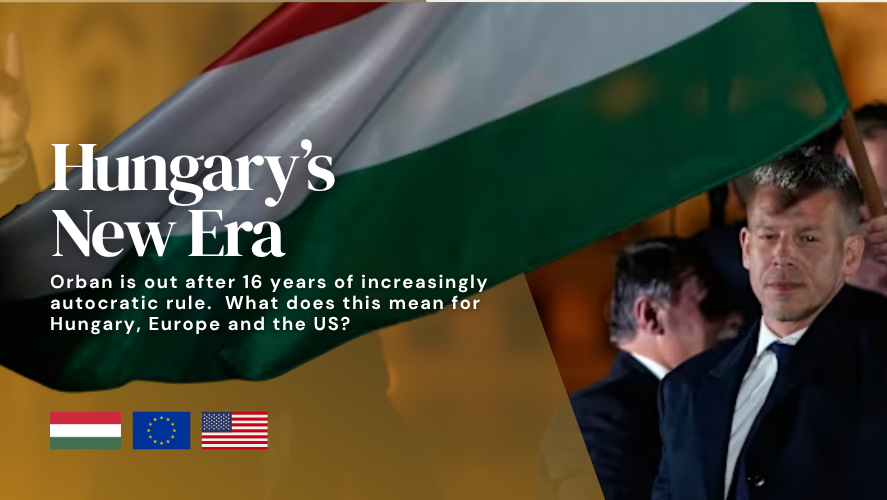
Viktor Orban ran Hungary for sixteen straight years. He rewrote the courts, the media, the electoral maps, and the constitution itself, and he became the guy every European far right populist on the continent (and plenty here in the US) pointed to when they wanted to know what long-term winning looked like. Then in April, Peter Magyar's Tisza party took a two-thirds supermajority in parliament, and Orban conceded after sixteen years in power.
So the master plan worked right up until it didn't. That tells you something about where the European right stands.

For about a decade the headline out of Europe has been the rise of right-wing populism: Brexit, the rise of the AfD in Germany, and anti-immigration parties picking up ground in local, national, and European parliamentary elections, with centrist and center-left governments wobbling. While all of that has happened, it doesn't tell the full story. Over the past several months right-wing parties threw everything they had at major elections and mostly hit a wall. Hungary is the best example because it swung from a hard-right, Trump-style figure to something closer to center-right, roughly the distance from Nigel Farage to John Major, a real correction toward the center even if it falls short of a progressive wonderland. France and Denmark have also held elections that back this up.
Once more than two parties are in play, the realistic ceiling for these parties sits well below what it takes to run a country.
Hungary
Orban's approach has a name in political science: competitive authoritarianism. You keep the formal democratic institutions and bend them to your purposes (the media, the district lines, the state's money, the courts) until the field tilts so far it stops resembling a fair contest. And you move slowly enough that no single step sets off a "constitutional crisis" alarm.

Brussels sanctioned Hungary over its democratic backsliding more than once. It mostly gaved Orban a villain to run against. However, Brussels couldn't hand Orban a working economy. Hungarian GDP went flat-to-negative in 2023 and grew about half a percent in 2024 and again in 2025, trailing an EU average that managed more. Inflation averaged around 17% in 2023, the highest rate in the EU that year, and public services frayed in ways people could see. Hungarians who had accepted the institutional bargain because the money was flowing watched the money stop.
That, plus a credible inside witness, was the combination the rigged system couldn't survive. Magyar was a Fidesz man. His ex-wife sat in Orban's cabinet as justice minister. He arrived with no real political career to speak of and one thing no outside opposition figure could buy: firsthand credibility on corruption, because he was describing a machine he had watched run from inside it. Tisza went from nothing in 2024 to a two-thirds majority this April. In Hungary that majority is the big prize, because it's the threshold to amend the constitution, which is the only tool that can take apart the architecture Orban spent sixteen years assembling with his own supermajority.

The model held as long as the economy held. Once it stopped delivering, there wasn't enough left to rig.
France
France showed the same limits to the right's appeal. The National Rally more than quintupled the towns it controls, from 11 to around 60, which looks like a breakthrough if you stop at the raw count. Look closer and the warning signs are all there for anyone hoping for a right-wing wave in next year's presidential race. City by city, the anti-RN vote consolidated in the runoff behind whoever stood the best chance of beating them. The far right took some cities, such as Nice, but for the most part the cordon sanitaire, the unwritten postwar rule that mainstream parties don't gift the far right a win, held one more time.
There's also a massive variable hanging over 2027. Marine Le Pen, the National Rally candidate in 2017 and 2022, faces an appeals ruling on July 7 on her conviction for misusing EU funds, which carries a five-year ban from office. If the ban stands and she's out again, the candidate becomes the 30-year-old Jordan Bardella. If that happens, the coalition that's beaten the Le Pen family three times would have to do it a fourth, this time against someone polling more favorably than his mentor ever did.

My money is on the French center and left holding their noses and lining up behind the anyone-but-them banner one more time, but it could be closer
Denmark
Denmark called a snap election for March 24, moved up because of the Greenland standoff with Washington, and produced a parliament neither bloc could call a win. Mette Frederiksen's Social Democrats came first and still posted their worst result in over a century; twelve parties cleared the threshold. The far-right, immigration-skeptic vote landed about where that bloc has landed for years. No new wave of voters, just the existing ones shuffled among different parties.
The European Far Right's ceiling is real
The template most of these parties borrowed (one dominant, charismatic leader, one defining issue, winner take all) was built for a two-party system, mainly the American one. Clear 51% and you run the government, push through your agenda, and do as much as you can before the voters reject you. That's the whole ball-game.
But, most of Europe doesn't operate this way. Proportional representation means 30% of the vote gets you 30% of the seats, a seat at the coalition table, and real leverage, but not the keys to the castle. To govern you need partners, and you have a hard time recruiting partners after a campaign spent calling them a danger to the country. The mainstream parties have spent eighty years building an informal habit of keeping those keys away from the far right, because Europe still remembers the alternative.
Orban is the one leader who cracked it. He did it not by assembling a bigger coalition but by spending sixteen years rewriting the rules from inside the building (the courts, the maps, the media) until the system itself worked for him. That's exactly the apparatus Magyar now holds the tools to dismantle. The lesson for everyone else on the continent: the ceiling is real, and the one man who found a way through it just lost.


Mình hay xem soi cầu XSMB với soi cầu MB mỗi ngày để kịp cập nhật trước giờ quay số, coi như thêm góc nhìn cho yên tâm. Ngoài việc đọc dự đoán XSMB, mình còn để ý thống kê lô gan và lô xiên để nhìn ra nhịp xuất hiện của vài bộ số quen. Thỉnh thoảng anh em trong nhóm cũng nhắc tới mấy công cụ như quay thử XSMB, Rồng Bạch Kim và dữ liệu lịch sử, vì dựa vào tần suất thực tế nên dễ soi lại cho rõ hơn. Mình cũng có ghé soicauxsmb.pro ở giữa quá trình tham khảo, chủ yếu để đối chiếu thêm chứ không kỳ vọng gì quá. Nói chung dự…
Mình chơi xổ số kiểu cho vui là chính, coi như giải trí sau giờ làm, trúng thì hên thêm chứ không trúng cũng chẳng buồn. Trước đây nghe bạn bè bàn chuyện “cầu” với “kèo” rôm rả nên mình cũng tò mò thử theo dõi, mà mới đầu thấy toàn thuật ngữ nên hơi ngợp. Dần dần mình tự ghi lại vài ý hay gặp khi đọc nhận định, rồi so với kết quả để xem có phải mình đang tự tưởng tượng ra quy luật không. Lâu lâu mình ghé soicauxsmb.io để có thêm chuyện tám với tụi bạn, nhưng vẫn tự nhắc là đừng đặt niềm tin tuyệt đối. Có hôm trúng chút đỉnh thì vui, có…